

ROXA-S100 Honduras Rosewood
Front: Stainless steel
Body: High-Precision Resin (3D Printed)
Rear: Honduras Rosewood
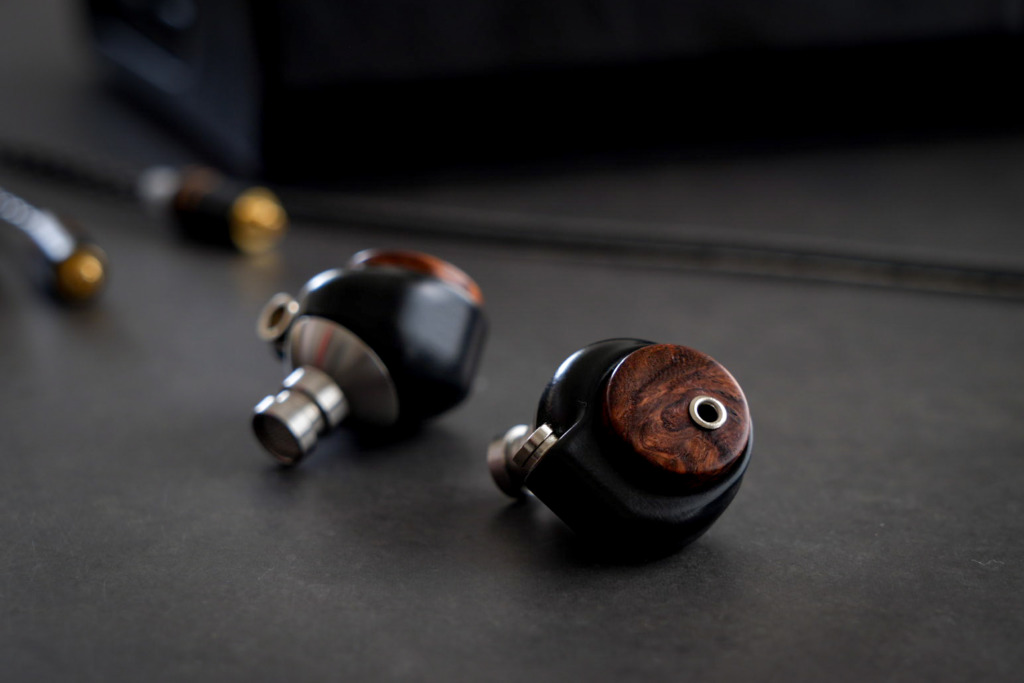
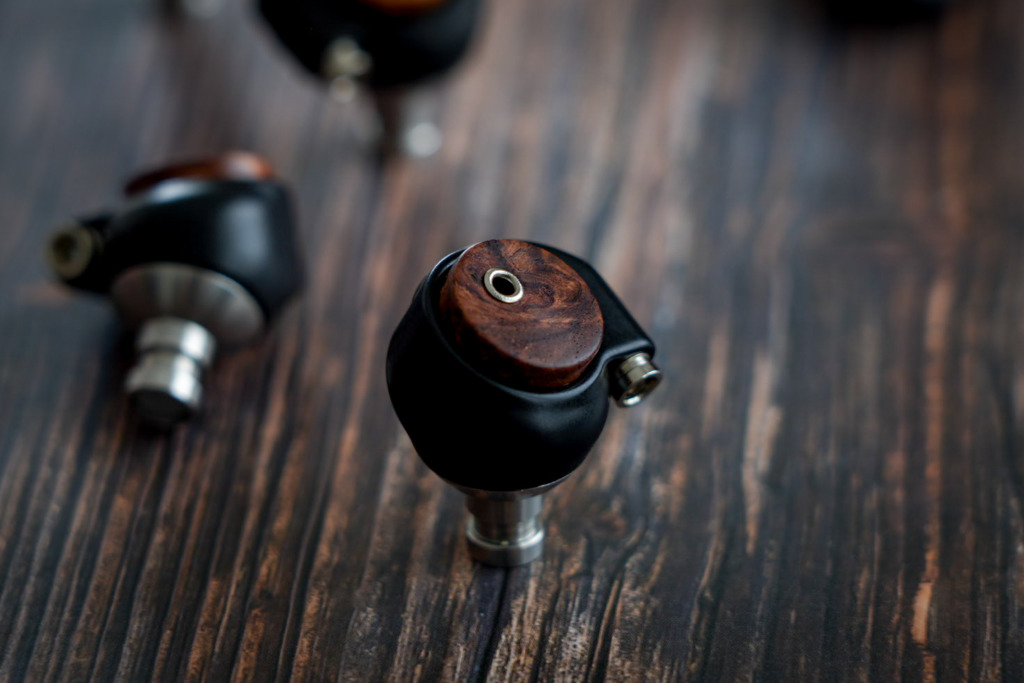



ROXA-S100 with a Honduras Rosewood backplate —
this one uses a rare burl wood cut, known for its unique, irregular grain patterns created by nature.
No two pieces look alike. In terms of hardness and density, this wood sits right in the middle of the range of materials used by 634EARS.
For the development of ROXA-S100, I built four prototypes using different types of wood with varying hardness to test how each affected the sound.
Among them, the one I personally chose for myself was this Honduras Rosewood.
Compared to previous models such as MIROAK-II, LOAK2, and TENORA,
the ROXA-S100’s backplate is smaller in diameter and less than half the thickness.
As a result, the influence of the wood on the sound is slightly more subtle.
Considering the price range of this model, I designed it so that no matter which wood you choose,
you can still clearly experience the distinct sound signature of ROXA-S100.
In terms of sound character, you can think of it as a stainless steel + resin housing version of the LOAK2.
While LOAK2 has two general sound directions —
TX01/TX02 with their bold and dynamic energy,
and TX03/TX00 with their smoother and more refined presentation —
the ROXA-S100 sits right between them, combining both clarity and warmth.
Compared to the previous MIROAK-II (standard type), the sound is slightly sharper,
and the new housing design helps reduce unwanted vibration, resulting in a clearer sound image.
The low end is tighter than before, yet the resin body leaves a slight “roundness,”
providing warm and full-bodied bass that feels natural and engaging.
Using Honduras Rosewood for the backplate adds a touch of warmth and softens the edges,
giving the sound a smooth and organic character —
a tonal signature that truly represents 634EARS.
If you’re aiming for a balanced and natural sound,
woods categorized as “B” or “C” in the 634EARS wood list are a good choice.
Alternatively, if you’re choosing a different wood,
select one with a similar hardness or density for the best tonal balance.