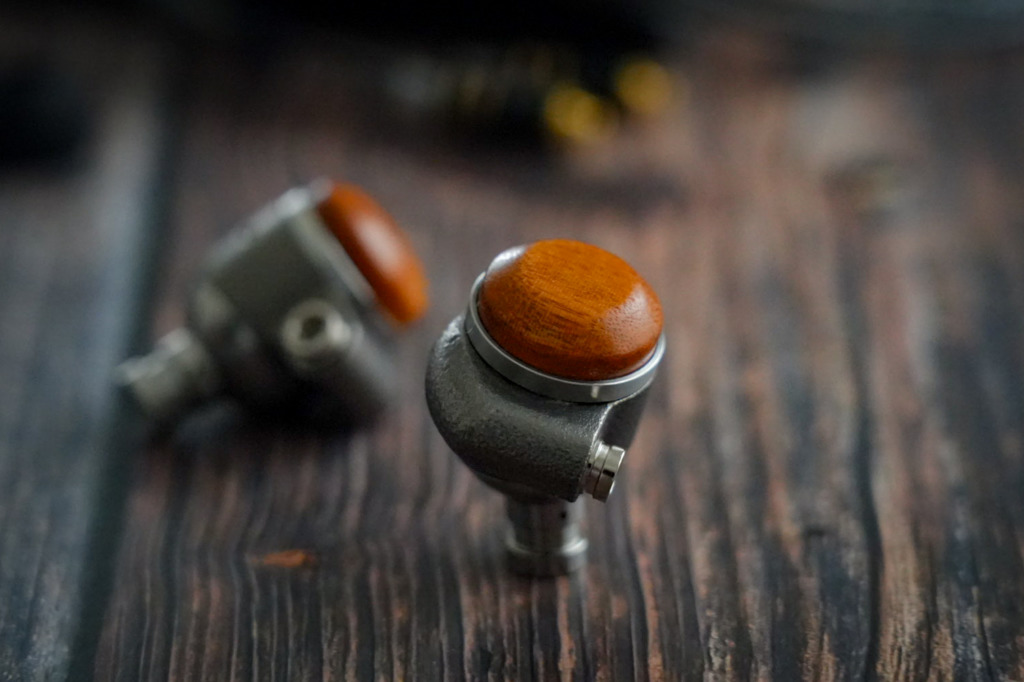
LOAK2-TX00 – Monitor Sound Tuning Model (Test product)
Front : Titanium(CNC)
Body : Titanium(3D Printing)
Rear : Chucket biga wood


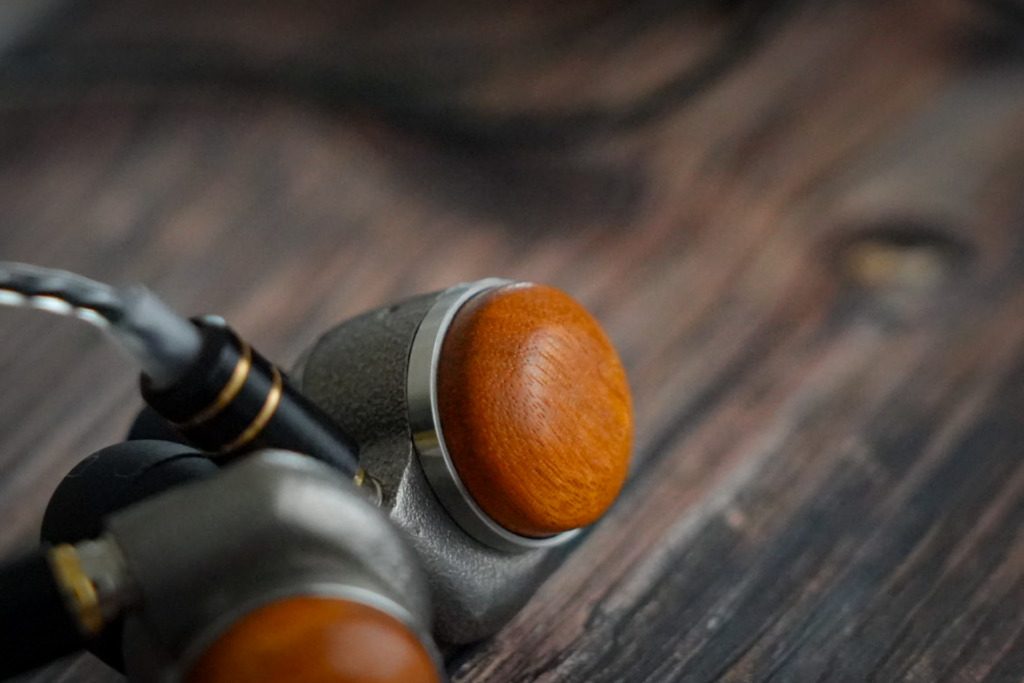

This is a custom-made LOAK2 Monitor Sound Tuning model. I created it partly as a test, but it turned out to be such a unique earphone that I wanted to introduce it here.
For testing, I used the LOAK2-TX 3D titanium housing, but the backplate is quite unique. The wood section is taller than usual and shaped somewhat like a hemisphere. The inside is carved out in the same hemispherical shape, which results in a larger rear housing space behind the dynamic driver compared to a standard LOAK2-TX01.
Monitor Sound Tuning Model Sound
The sound of this Monitor Sound Tuning Model is the same as the previously posted model below:
By restricting the air intake of the driver more than in the regular LOAK2-TX series, tension is applied to the diaphragm, producing a highly detailed, sharp sound with clear definition. It enables very delicate and fast-reacting sound reproduction.
However, this also results in strong sharpness in the treble range. To address this issue, a filter is installed directly in front of the driver to suppress the sharpness, and an additional filter is placed inside the front housing nozzle to reduce reflective sounds. This dual-filter structure ensures that while the treble remains mild and easy to listen to, the sound does not become overly soft, retaining its delicacy and precision. Furthermore, this dual-filter setup suppresses residual reverberation inside the housing, resulting in a very pure and uncolored sound.
Backplate Shape of This LOAK2-TX00
However, because this tuning produces tight, thin sound lines, the bass volume is relatively modest. In the previous brass closed-back model, the internal high-rebound material of the metal backplate compensated for this weakness by adding bass volume. But in this case, since wood is used, incorporating a different internal material would hinder the wood’s inherent porous air absorption characteristics.
To make full use of the wood’s natural porosity while adding mid-to-low frequency volume, the owner of this earphone suggested a unique idea: machining the wood into a special shape. This expanded the internal rear housing space, resulting in greater air rebound against the diaphragm, leading to larger diaphragm movement and increased mid-to-low frequency volume. Additionally, since the wood used this time is Chucket Biga wood, which has good flexibility, the effect is even more pronounced.
However, because of this, the air rebound inside the rear housing feels slightly slower, giving the sound a slightly relaxed attack speed. It feels as if the diaphragm tension has loosened slightly. Due to these effects, compared to the previous LOAK-PROTOTYPE 00, the TX00 feels softer and milder.
This structure has both advantages and disadvantages, but understanding them and applying them effectively can bring the sound closer to one’s preferences. It was very worthwhile to test it this time and gain these insights. I am grateful to the owner of this earphone for providing the idea.